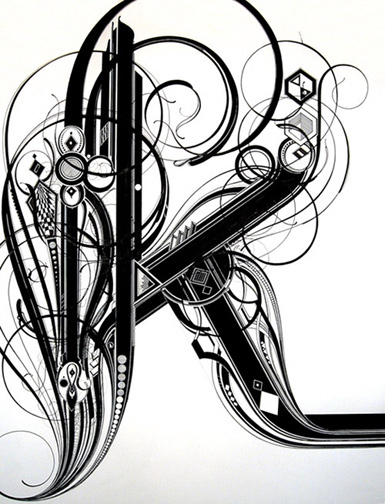
Creating an X-ray effect using Adobe Flash
http://www.youtube.com/watch?v=CvGhV_vCRpM
Sunday, April 5, 2009

Final Idea 4

PEDESTRIAN / 2002
This work of digital art by Shelley Eshkar and Paul Kaiser projects its imagery directly down onto a city sidewalk or the concrete floor of an art gallery. Conceived as a public sculpture, Pedestrian’s digital projection merges with the rough surfaces we walk upon. Its tiny denizens wander through a trompe l’oeil illusion in a city that seems to float both upon and within that surface. The figures move with an uncanny accuracy, for their movements derive from those of real people through a process called "motion capture." Their actions are pedestrian—but their over-all patterns evoke a mysterious narrative. (www.music.columbia.edu/.../HTML/PaulKaiser.html)
This work of digital art by Shelley Eshkar and Paul Kaiser projects its imagery directly down onto a city sidewalk or the concrete floor of an art gallery. Conceived as a public sculpture, Pedestrian’s digital projection merges with the rough surfaces we walk upon. Its tiny denizens wander through a trompe l’oeil illusion in a city that seems to float both upon and within that surface. The figures move with an uncanny accuracy, for their movements derive from those of real people through a process called "motion capture." Their actions are pedestrian—but their over-all patterns evoke a mysterious narrative. (www.music.columbia.edu/.../HTML/PaulKaiser.html)
Final Idea 3
 Golan Levin
 Ghost Pole Propagator (2007: Golan Levin) is an interactive installation originally developed for projection in the 13th century Belsay Hall Castle, in Newcastle, England as part of the Picture House exhibition. The exhibition catalogue states: "Levin's new interactive installation presents a phantom transcription of visitors to the Belsay Castle, recording and replaying highly abstracted 'skeletons' of the artwork's own observers. Projected on the walls of the castle's medieval kitchen, the quiet and otherworldly animations suggest the bustle of past ghosts, or ancient petroglyphs."
Ghost Pole Propagator captures and replays the 'skeletons' of passersby in its environment, creating a layered and dynamic tapestry that reflects the history and activity of a locale. Presenting a universal communication of presence, attitude and gesture, the stick-figures this artwork generates are compact and expressive means of representing the human form. The format of the work is variable; in other presentations, the project serves as a kind of 'interpretive monitoring station' for nearby pedestrian traffic. (http://www.flong.com/projects/gpp/)
Final Idea 2
 http://www.nikolasschiller.com/
http://www.taubaauerbach.com/misc.html
An interface generally refers to an abstraction that an entity provides of itself to the outside. This separates the methods of external communication from internal operation, and allows it to be internally modified without affecting the way outside entities interact with it, as well as provide multiple abstractions of itself. It may also provide a means of translation between entities which do not speak the same language, such as between a human and a computer.(www.wikipedia.org)
Final Idea 1

Art Nouveau is a possible direction for my final project. The art movement is concentrates on the style and decorative arts. The forms are organic, normally floral or other plant inspired motifs, as well as highly stylized flowing curvilinear forms. I could incorporate the art form through an animation or projection.
The animation would consist of bring the images alive, adding motion, layering, and narratives to the work.
The animation would consist of bring the images alive, adding motion, layering, and narratives to the work.
----------
Inspirational Artists:
Alphonse Mucha (1860-1939)
Maurice Pillard-Verneuil (1869-1942)
Henri Meunier
David Cappiello
Henri Privat-Livemont
Critique
During the critique of my projection project some good points were brought up on the elements I added:
Creating the scenery and projecting the graffiti
Tricking the eye with architectural elements
Sound level activation (talking graffiti disappears-silence graffiti reappears)
Some even better suggestions came about to craft a more successful project:
Motion sensor (to control the appearance and disappearance of the graffiti)
Props (such as trash bags to create juxtaposition between the illusions of objects with real objects)
Audience interact (blackboard effect—they can create their own graffiti)
Creating the scenery and projecting the graffiti
Tricking the eye with architectural elements
Sound level activation (talking graffiti disappears-silence graffiti reappears)
Some even better suggestions came about to craft a more successful project:
Motion sensor (to control the appearance and disappearance of the graffiti)
Props (such as trash bags to create juxtaposition between the illusions of objects with real objects)
Audience interact (blackboard effect—they can create their own graffiti)
Interactive Billboard
 In 2007 Adobe installed an interactive installation to showcase Adobe Creative Suite 3. The installation demonstrated some of the capabilities of the software. Instead of using a mouse or keyboard, visitors interacted with the installation by simply moving in front of the large screen.
The installation was located at Virgin Megastore in Union Square, New York City. At first the screen showed a blank canvas with simple slogans for Adobe CS3, but when individuals walked by the screen all kinds of graphics appeared. The motions of the people were tracked by an infrared camera so their entire body was used as a brush.
Technological advances used by Adobe for their interactive billboard would lend well with my graffiti projection project. Instead of the images automatically showing up on the screen and disappearing with the sound level, the graffiti and architectural elements could appear by the motion of the individual across the screen. While no one crossed the path in front of the screen a realist image of an alley or side building would display.
link to video:
http://www.youtube.com/watch?v=a-NRdyUx8Lc
Nikolas Schiller
 Nikolas Schiller is a prominent digital map artist who lives in Washington, DC. He is mainly known for developing Geospatial art, which is the name given to his collection of abstract maps created from aerial photographs of D.C. He has created an interactive website around his numerous abstract maps produced within the past years. It wasn’t until March of last year that Schiller removed an exclusion protocol that allowed for his website to be accessed from all major search engines. When I first learned about Schiller’s art you had to know his whole name before any search engine would being up the link to his website.
Lately he has been know to attend voting rights demonstrations in D.C. wearing colonial outfits to emphasize the fact that District residents are colonists who suffer from taxation without representation.
The work I find most interesting in Schiller’s collection of abstract maps is his Mother Nature projections. One of his first commission pieces Lady Liberty on a quilt of the Pearl River Delta, 2005, Schiller incorporates the patrons’ native country Hong Kong were the Pearl River Delta is located. The NASA satellite image of the Pearl River Delta is used as the backdrop of the whole image. On the body of the model Schiller uses the same modified aerial photography he’s used in his other D.C. based rendered art. The finished image has a contrast between the past and the present that makes it successful. This art has some similarities and differences with the projection project were working on. It is similar in that, the map is projected onto another object to create something unique, interesting, and reminiscent of a figure. The differences are that the projection is not an actual projection on an object, but a printed 2d surface.
Saturday, February 21, 2009
Jon Haddock
Walt Disney Productions v. The Air Pirates, 581 F.2d 751 (9th Cir. 1978) (RGB Grid)

Haddock creates images that are made up of numeric values that represent the levels of red, green, and blue in each pixel of the source image. The values run from 0 (black) to 255 (white), since the value of black takes up less physical space than the value of white, the source image would still be visible in a matrix of values.
This work is an example of appropriation to open source in new media art. Artist have always been influenced by other art, so much so that some artist will imitate one another, but in new media art appropriation of sources transform from coping to sampling, emerging as an alternative creative piece. Permitted by technologies of mechanical reproduction, artists start to use found images like Haddock, but changes the status of artistic originality in the face of mass-produced culture. Hancock does this by altering the image of a Walt Disney Production into an inverse image and columns of numbers.
The simple breakdown of the image into numeric values reminds me of the elementary elements one needs to build from to create art. Having an understanding of the image as values, change the way the viewer looks at the work. It is no longer viewed as a recognizable image, but now is compared to its source image and slowly read to see the connection between the two.
Haddock creates images that are made up of numeric values that represent the levels of red, green, and blue in each pixel of the source image. The values run from 0 (black) to 255 (white), since the value of black takes up less physical space than the value of white, the source image would still be visible in a matrix of values.
This work is an example of appropriation to open source in new media art. Artist have always been influenced by other art, so much so that some artist will imitate one another, but in new media art appropriation of sources transform from coping to sampling, emerging as an alternative creative piece. Permitted by technologies of mechanical reproduction, artists start to use found images like Haddock, but changes the status of artistic originality in the face of mass-produced culture. Hancock does this by altering the image of a Walt Disney Production into an inverse image and columns of numbers.
The simple breakdown of the image into numeric values reminds me of the elementary elements one needs to build from to create art. Having an understanding of the image as values, change the way the viewer looks at the work. It is no longer viewed as a recognizable image, but now is compared to its source image and slowly read to see the connection between the two.
Danny Rozin

Interactive artist, Danny Rozin works in very particular artistic surroundings, making mirrors from unreflective surfaces. He accomplishes this by using a tiny camera that gathers light and shape data, before sending it to a computer that processes it and uses hundreds of tiny electric motors to shift tiny blocks of material into the image in front of the device. In Wood Mirror, Rozin uses blocks of wood to compose this ghostly image, imprinted upon the wooden pixels like a haunted trace and just like a real mirror, subtle gradations of shade are achieved by both the natural grain of the wood and the angle at which they are displayed, casting shadow. Since building the wooden mirror Rozin has experimented with a number of other materials.
The main concept of this project and others like it was the idea of everything around us acts as a mirror, or perhaps more precisely making everything around us into a mirror onto the world. By using a naturally unreflective surface to create reflections, Rozin highlights human beings interest in technical accomplishment, but the fact that every object can reflect in some sense the image of those who have crafted, used, or sold it.
“The nature of reflective surfaces and reflections is what is at stake here - but what’s more, it’s a stunningly impressive piece of craftsmanship in its own right and if anything can be said to reflect the image of those that created it, then this surely reflects well on Rozin(http://www.environmentalgraffiti.com/featured/the-amazing-wooden-mirror/1425.)”
In Wood Mirror, Rozin proves visual feedback by the creation of the viewer’s reflection though the visual input of the camera, much similar to the idea of our current text animation project. The projects reflect the artists who created them as well as the viewer’s that participate in the interactive animation through input text and visual feedback by moving objects around the page.
The main concept of this project and others like it was the idea of everything around us acts as a mirror, or perhaps more precisely making everything around us into a mirror onto the world. By using a naturally unreflective surface to create reflections, Rozin highlights human beings interest in technical accomplishment, but the fact that every object can reflect in some sense the image of those who have crafted, used, or sold it.
“The nature of reflective surfaces and reflections is what is at stake here - but what’s more, it’s a stunningly impressive piece of craftsmanship in its own right and if anything can be said to reflect the image of those that created it, then this surely reflects well on Rozin(http://www.environmentalgraffiti.com/featured/the-amazing-wooden-mirror/1425.)”
In Wood Mirror, Rozin proves visual feedback by the creation of the viewer’s reflection though the visual input of the camera, much similar to the idea of our current text animation project. The projects reflect the artists who created them as well as the viewer’s that participate in the interactive animation through input text and visual feedback by moving objects around the page.
Saturday, February 7, 2009
Nam June Paik

Examining the clips from Young Hae Chang Heavy Industries, I made a connection with Nam June Paiks’ installation at the Smithsonian American Art Museum titled Electronic Superhighway continental U.S, Alaska, and Hawaii in the way it’s viewed and the mood it can provoke.
In 1995 Paiks’ piece Electronic Superhighway was a stunning example of his cultural criticism. With this installation, Paik offers commentary about an American culture obsessed with television, the moving image and bright shiny things. Paik argues that the flashing images “seen as though from a passing car” with audio chips from The Wizard of Oz, Oklahoma, Martin Luther King Jr. and other screen shots, expressing that our picture of America has always been influenced by film and television. Walking along the piece suggests the enormous scale of the nation and reminds us that individual states have distinct identities and culture, even in today’s information age.
In 1995 Paiks’ piece Electronic Superhighway was a stunning example of his cultural criticism. With this installation, Paik offers commentary about an American culture obsessed with television, the moving image and bright shiny things. Paik argues that the flashing images “seen as though from a passing car” with audio chips from The Wizard of Oz, Oklahoma, Martin Luther King Jr. and other screen shots, expressing that our picture of America has always been influenced by film and television. Walking along the piece suggests the enormous scale of the nation and reminds us that individual states have distinct identities and culture, even in today’s information age.
Much like Young Hae Chang Heavy Industries, “Dakota” the viewer is drawn into the work trying to read every word or hear every sound.
“[…] it was amazing! my favorite thing in the whole museum. So bright and u get sucked into it. I stood there for 20 minutes just looking at this trying to catch all the clips.”missbananasplit121 (comment from youtube.com)
Also, both artists heavily control how the viewer reads the text or sees a clip by the way it’s displayed. For instances, Chang’s animations emphasize some text over others with sound or speed that they appear on screen. The same can be said for Paiks’ piece because the audio and visual clips were specially picked and blended together so that a viewer will acquire the artist understanding of the work.
In creating my version of a Young Hae Chang Heavy Industries animation, I will take into consideration the methods both artists used to successful guide their audiences.
“[…] it was amazing! my favorite thing in the whole museum. So bright and u get sucked into it. I stood there for 20 minutes just looking at this trying to catch all the clips.”missbananasplit121 (comment from youtube.com)
Also, both artists heavily control how the viewer reads the text or sees a clip by the way it’s displayed. For instances, Chang’s animations emphasize some text over others with sound or speed that they appear on screen. The same can be said for Paiks’ piece because the audio and visual clips were specially picked and blended together so that a viewer will acquire the artist understanding of the work.
In creating my version of a Young Hae Chang Heavy Industries animation, I will take into consideration the methods both artists used to successful guide their audiences.
Links
http://www.youtube.com/watch?v=4rdeB_VsYIE (Video of the installation)
http://americanart.si.edu/collections/interact/zoom/paik.cfm (interactive picture of the installation)
http://americanart.si.edu/collections/interact/zoom/paik.cfm (interactive picture of the installation)
Friday, January 30, 2009
Tauba Auerbach
ugariticalphaL.jpg)
Ugaritic Alphabet, Ink and pencil on paper (2006)
Tauba Auerbach is much different than your typical New Media artist in that her practice primarily revolves around painting. Auerbach a contemporary artist deals mainly with the short comings and possibilities of language. She approaches language as a technology inherently progressive and positive; a system of symbols by which the interior complexities of a person’s mind, body and general self are converted into an external, communicable form. Auerbach’s focal point is to play with the identity of language examining their placement on a page or as individual letters.
Artists have incorporated language, text, and words into their work for decades in order to move away from pure illustrative representation and the fixation on art as an object. Auerbach’s work is much different then pervious artist by shifting the multiplicity of this age old “technology” and practice by reconfiguring letters to create word puzzles that lead the viewer to logical but unexpected conclusions, extending human capabilities.
“I feel as though I know each letter intimately-its shortcomings and its tendencies. I feel close to them.”-Auerbach (www.newimageearthgallery.com/tauba.html)
Moreover her extreme and rigorous investigation of text, language, and letters goes straight to the heart of how our world communicates and explores the structure of language, the composition of words, phonology, syntax, and semantics.
Tauba Auerbach is a cue that New Media art does not have to encompass only digitally produced or performance art. It can incorporate commonly known mediums like paint or ink. Tauba Auerbach use of words, semantics, and symbols is pleasing to me because I have always been fascinated by the way artists incorporate text in their work. Her work in particular inspires me to act, creating a work intertwined with symbols and text.
http://www.taubaauerbach.com/ (The website is neat!)

'Yes and No and/or Yes or No', Color Aquatint Etching on Somerset paper (2008)
Tuesday, January 27, 2009
Paul Kaiser & Shelley Eshkar
 Paul Kaiser and Shelley Eshkar are digital artists whose collaborations combine motion-capture with dance, sometimes in the form of installations and other times as projections for the stage. Their work embraces the artistic views and ideals I believe New Media art embodies. The duo’s work is very much infused with technology and personalized computer programs, but it does not exude from it. Most of Kaisers’ and Eshkars’ work has a painterly free flowing or realistic feeling. This may be because much like myself Kaiser and Eshkar research explores several mediums such as literary sources, human motion, and everyday images/routines to gain inspiration and direction for projects.
The work titled “Pedestrian” is the main piece that lured me to Kaisers’ and Eshkars’ work. I was entranced by the miniature realistic looking characters and unusual camera view of the animation. “Pedestrian” is an animated video loop that is usually projected on the floor or wall. The video places the viewer as an omniscient observer, suspended in space panning over urban street scenes and parks were the viewer can witness the movements of the city’s inhabitants.
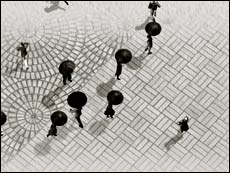
This is similar to other New Media artist works in that it contains the sense of surveillance or invading ones privacy. Kaisers’ and Eshkars’ “Pedestrian” examines human routine, behavior, and mentality of crowds in an urban setting successfully because of the previous research performed for projects to have the best possible outcome. The combination of trompe l'oeil illusion and realistic nature gives the piece a reflective or dream quality.
Subscribe to:
Posts (Atom)